TL;DR: Sendr used Mux to build a video-first outreach platform that generates personalized, AI lip-synced videos at scale. With Mux handling video infrastructure, Sendr launched with 3,500 users in less than 3 months and integrated the platform in under a week.
When Sendr's founders were building one-to-one videos for the Financial Times, they saw that personalized videos created connection and drove engagement. But the process was manual, time-consuming, and difficult to scale.
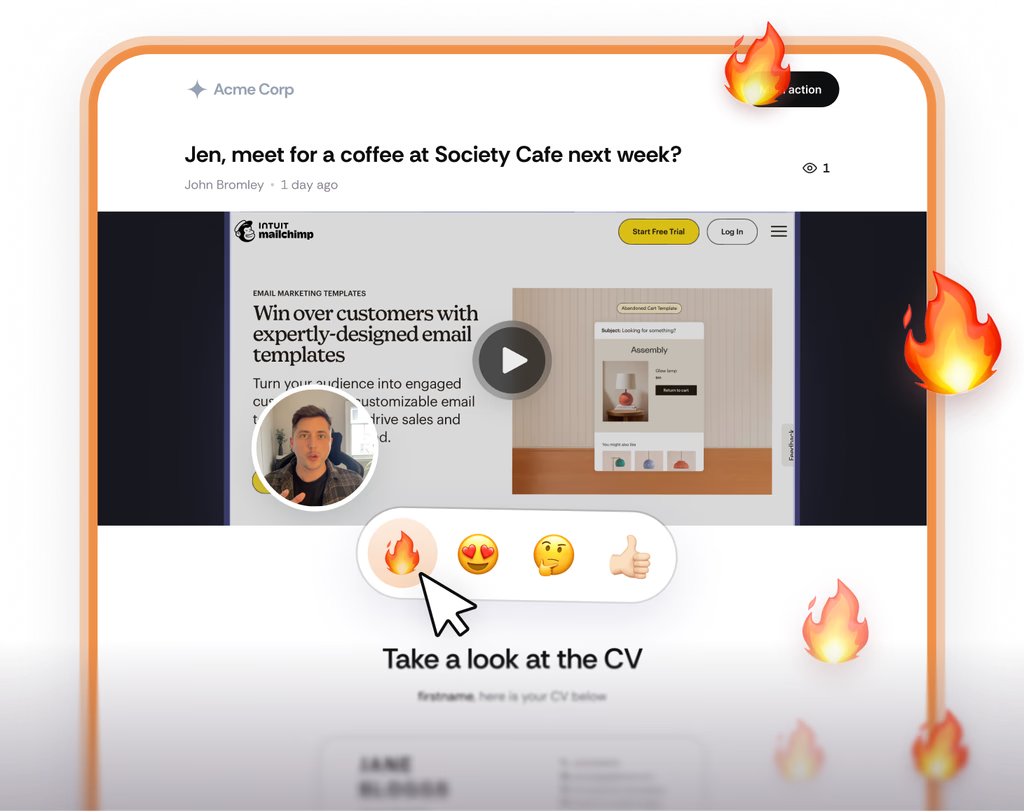
So they built Sendr: a platform that uses AI lip-sync technology to create thousands of personalized videos from a single recording.
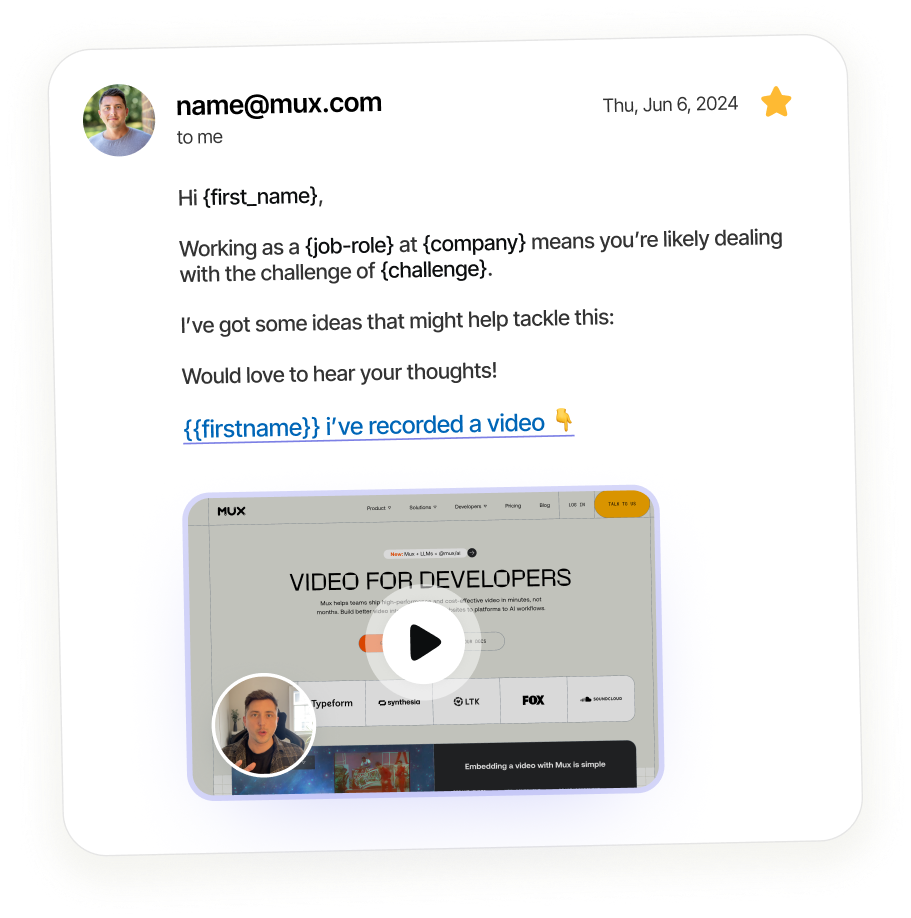
A person records once, and the system generates unlimited variations — each customized with the recipient's name, company logo, and other details seamlessly integrated into the video.
The technical challenge
Sendr is a video-first CRM (Customer Relationship Management) for outreach — combining data enrichment, sequencing, and personalized video at scale.
Their personalization technology uses two AI models working together: first, it transcribes the original video then creates a voice clone from an initial sample.
For every recipient in a campaign, the system generates a unique introduction with the recipient's name, then applies lip-sync technology to match the speaker's mouth movements to the new audio.
The result looks remarkably natural, where the speaker — not AI-generated avatars — easily says "Hey Priya" or "Hey Marcus.”
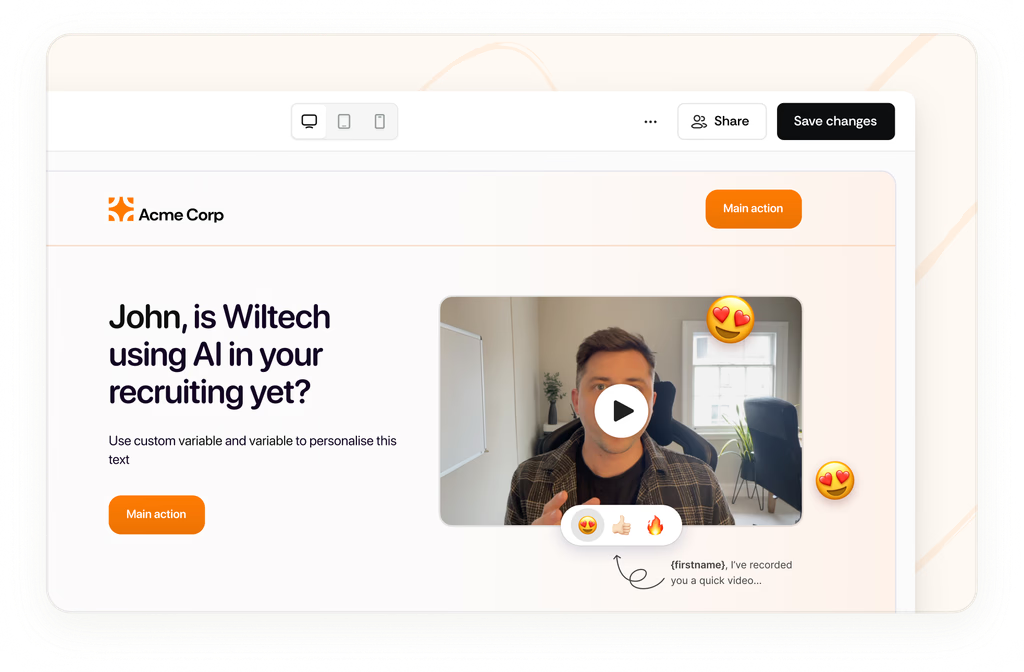
And because Sendr only personalizes the first few seconds rather than entire videos, users can send a thousand personalized videos for a fraction of what full AI avatar platforms charge.
Mux Player embeds into every landing page, powering campaign templates that can reach tens of thousands of contacts. The Financial Times for example, has done a campaign for 80,000+ contacts.
This kind of scale requires reliable video playback while keeping costs sustainable for a startup. Building video infrastructure in-house wasn't an option.
"Let's not try to reinvent that wheel," said Dave Cannell, Sendr’s Co-founder and CEO. "I think that's part of building a startup today — choosing your battles. You have to focus on what's the bit that you add value to that moves the needle for users, and where can you just leverage the amazing work of others."
"The thing that will differentiate us is how well we build personalization on a strong video infrastructure. Mux is central to that strategy."
Why Mux?
Initially, Dave worried about costs. A campaign might create a million videos — but not all recipients will open them. Modeling out all the variables felt risky.
"When I modeled things out, I was a little bit concerned that maybe we might not be able to make this work," he recalled. "You don't know exactly how many of those recipients are going to open the videos, how many of the videos are going to get streamed."
Two Mux features resolved those concerns: basic encoding and cold storage.
Mux's basic encoding tier offers $0 encoding. "Thanks to Mux's basic encoding, our costs were reduced by 90%," Dave said. "That's a huge win."
Automatic Cold Storage provided additional savings. Personalized outreach videos have a short shelf life — once a recipient views their video, they rarely return to it. Mux moves unwatched content to cheaper storage automatically, so Sendr doesn’t even have to take action to get the benefit of cost savings.
These cost savings allowed Sendr to offer plans 10-20x less expensive than competitors.
"Mux's pricing structure took a lot of risk away from us," Dave said. "I could see us growing with the company for years."
Effortless implementation
Sendr integrated Mux's Video API in under a week.
"It was super easy to implement," Dave said. "Under a week with one developer."
In less than 3 months, the platform gained 3,500 users. Video infrastructure worked reliably from day one.
"We've had outages from other tech providers, but we’ve never had a bug or an outage or an issue with Mux," Dave noted. "As a startup, you have enough fires to fight — video doesn't need to be one of them."
That held true even during crunch time before Sendr's launch.
"We scaled super fast a couple of weeks before launch. Being able to ping back and forth, make sure I understood my cost modeling and felt ready — that was huge," Dave added.
What's next
Sendr is expanding their Mux integration. Next up: a full analytics suite to track average watch time and engagement metrics, plus auto-captioning across different languages.
"There's loads that we want to implement next," Dave said. "It feels exciting to know that Mux is innovating, and we can put that technology into our users' hands really easily."
The platform is also expanding beyond email. Sendr plans to be the first platform to deliver lip-sync personalized videos natively into LinkedIn DMs — so recipients can watch directly in their feed without leaving the platform.
"We see ourselves as a video-first CRM," Dave explained. "We'll have the data enrichment, the sequencing, the dataset — but the way that we have video at scale with multiple personalized variables is really differentiating. And that's possible because of Mux."
For founders building video-centric products, Sendr's experience offers a clear lesson: focus engineering resources on differentiation, not infrastructure.
"Effortless," Dave said when asked how he'd describe Mux to other founders. "It feels effortless."