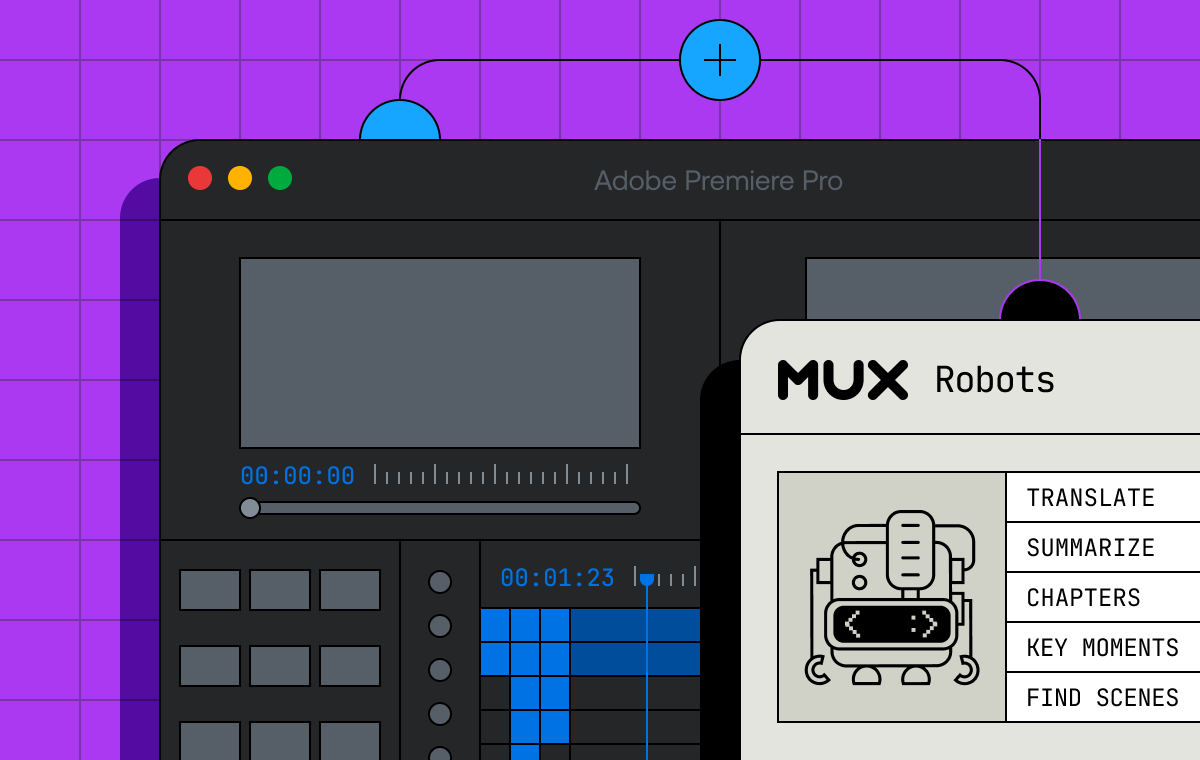
When explaining Mux Robots to prospects, we quickly realized a features list or a dashboard demo wasn't creating the "wow" moment we wanted. They saw it and they liked it, but they were having a hard time connecting it to their own video experiences and why it mattered to them today.
If you've ever sat through a demo and had to imagine how it would actually work for you, then you know the gap we're talking about, and that's on us. If someone has to translate our product into their own world, we've left too much of the demo to guesswork. When the value depends on context, we need to put that context directly into the experience.
Instead of trying to explain Mux Robots better, we built something prospects could try for themselves: a demo page using their own brand, color palette, and content. It shows what Mux Robots can do with context relevant to them and their product.
First, learn about their world
We wanted to go further than slapping a logo on a page. That's a start, but we want to know:
- Are they already using video, and if so, what are they doing with it that Mux Robots could pick up?
- If they aren't using video yet, is there a clear roadmap where video could fit in?
This is where Firecrawl, a web-scraping API, comes in. From a single company URL, it gives us three useful layers:
- Their visual identity. Logos, colors, fonts, spacing, and imagery.
- Their business context. How they describe themselves, who they serve, and the language they use.
- Their video opportunity. Where video already shows up, and which Mux Robots workflows might fit.

We use that info to draft the demo: a starting theme built from their colors, a headline in their language, a description, and use cases pulled from their site. It is not the finished pitch, though. Someone on sales reviews the story and tightens the framing before it reaches the prospect.
We're walking into a call with a prospect who knows their business better than we do. The page has to show that we've done our homework.
Let them bring their own content
We build the demo with three styled templates, then drop in each prospect's brand assets from Firecrawl. The page reads as theirs the second it opens. Then sales sends a branded private upload link, the prospect drops in a file, and that exact video appears on the page and kicks off the Mux Robots workflows.
If a product’s value depends on a customer’s own content, this is one of the shortest paths to getting them there. We want to provide a low-friction way of bringing something real into the demo. Doing so means we're more effective at closing the gap between “could this work for us?” and “this does work for us.”

The demo is now their own
We are not walking into the call with a canned asset. We open their branded page and look at real summaries, clips, answers to questions asked about the video, and other Mux Robots outputs from the file they uploaded. They've watched Mux Robots run on their own video by the time the call ends, and that's when they start asking how to integrate it.
Give sales talking points
The prospect-facing page is only half of it. The other half is giving sales specific talking points that connect the demo to the prospect's business. And with the scrape from their site, we can give the team what they need to make that connection. By leading with a strong demo, we give the prospect something concrete to react to, and sales a path to guide the conversation.

A human still finishes the last mile
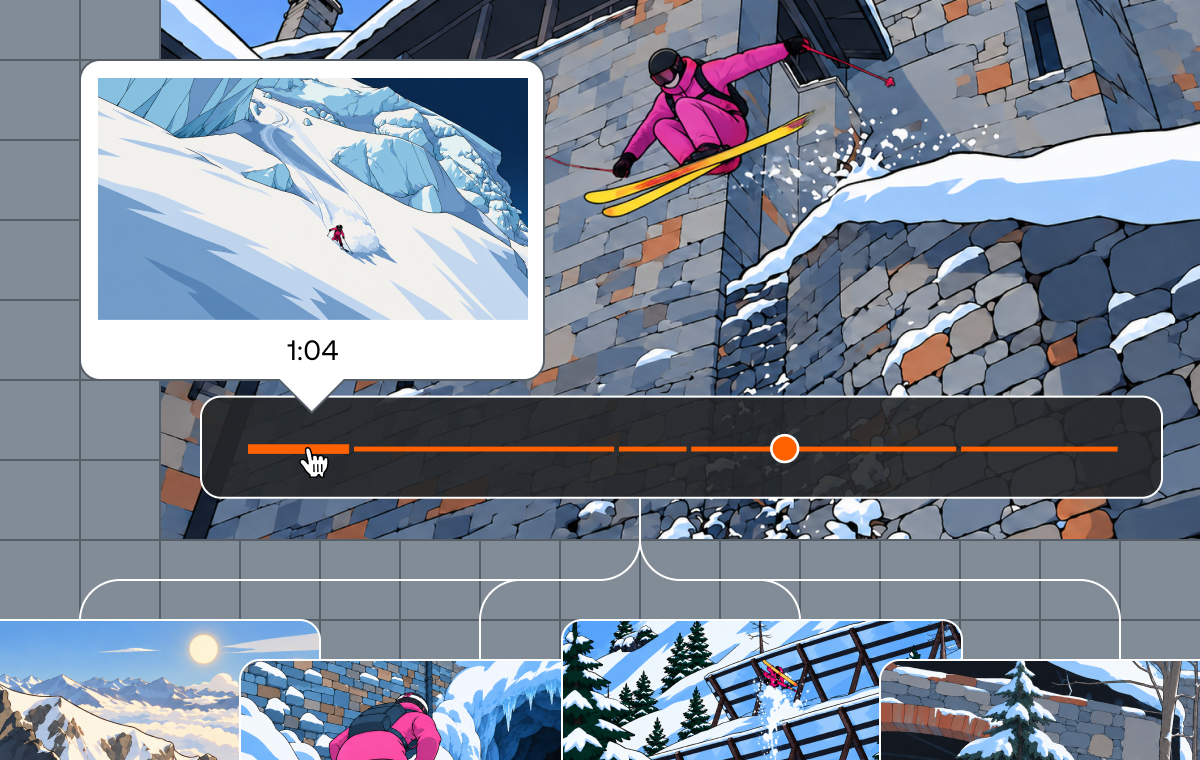
Those talking points are not a locked AI-generated script. A salesperson can add context, tighten the arc, and reshape the language. They can also pull specific moments to share: finding key moments pairs with our instant clipping API to generate short, shareable clip links, and that path is built into the demo.
We're still tuning this
This approach works because it removes guesswork. Instead of providing a features list or describing the "wow" moment, we hand the experience directly to the prospect. Firecrawl surfaces their brand and context, the upload brings in their content, and Mux Robots runs live on their own video.
The real test is not whether the demo looks polished, but whether prospects engage, book a conversation, and become customers. And because we own the experience end to end, we can measure exactly where that happens.
Learn more about our Mux Robots workflows in our docs.